 English
 Ελληνικά
 Español
 Português
 Dutch
Dutch Deutsch
 Eesti keel
The UK Home Fragrance Market: Growth, Trends & Outlook for 2026
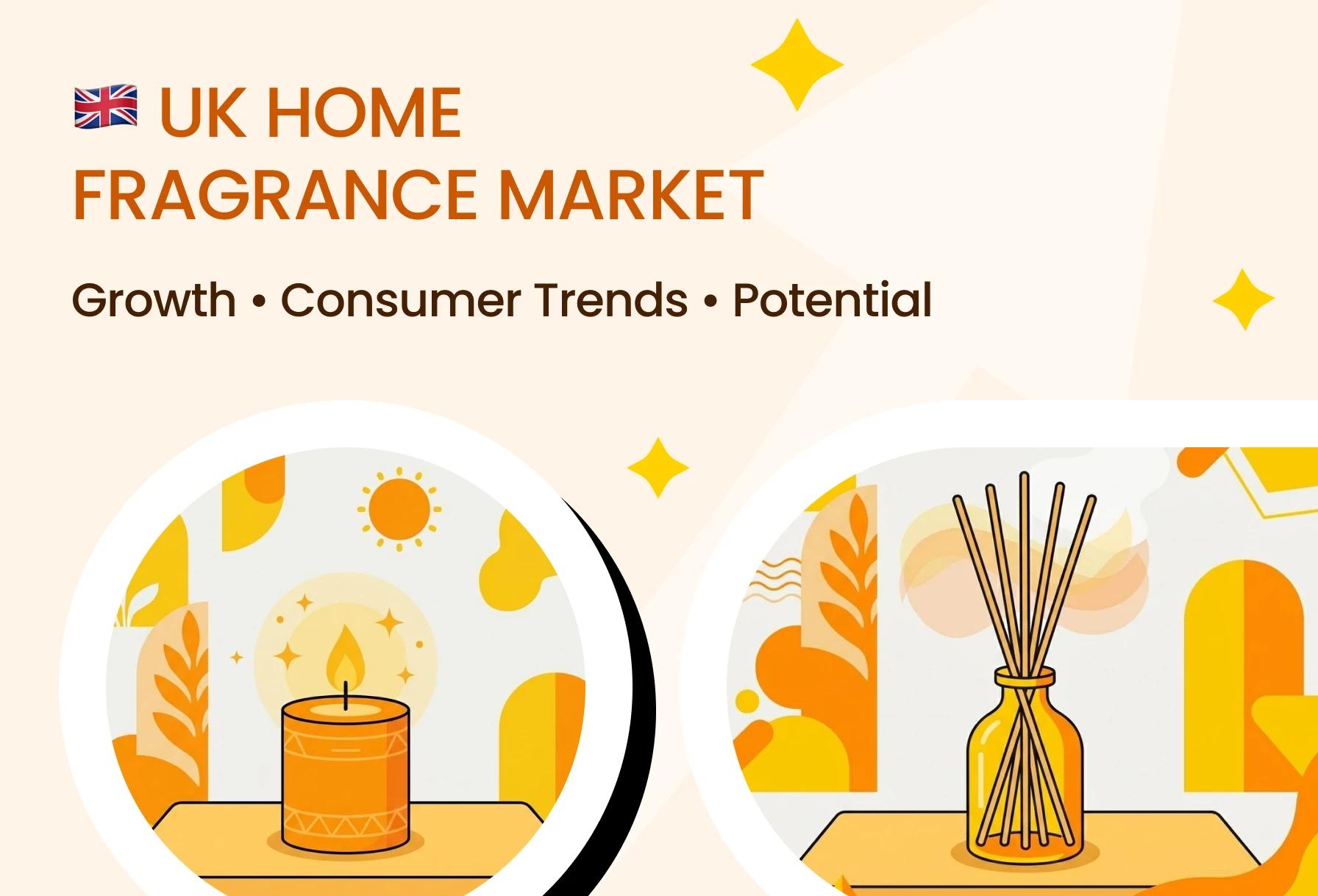
The UK home fragrance market is no longer just about candles on coffee tables. In 2026, it represents a structured, repeat-driven consumer category with steady growth, strong gifting demand, and increasing alignment with sustainability and wellbeing trends. Here’s a closer look at what’s shaping the market and why it deserves attention.
Market Size & Growth: A Stable, Expanding Category
The UK home fragrance market is projected to grow from approximately $622 million in 2025 to nearly $787 million by 2030, reflecting steady annual growth of around 4.8%.
This isn’t explosive, venture-style growth, but that’s exactly the point.
Home fragrance sits within the affordable luxury segment: products that feel premium, emotional and indulgent, yet remain accessible even during economic uncertainty. Categories like this tend to demonstrate resilience rather than volatility.
What Consumers Are Actually Buying
The UK home fragrance market spans several product types:
- Candles (still the largest segment)
- Reed diffusers
- Wax melts
- Essential oils
- Room sprays
- Plug-in and electric diffusers
Candles continue to dominate for three key reasons:
- Strong gifting culture (especially during seasonal peaks)
- Emotional appeal and visual aesthetics
- Easy entry point into the category
But growth is not limited to candles. Wax melts have built loyal communities, particularly among younger consumers, while diffusers and essential oils align with the rise of wellness-driven purchasing.
Why This Market Is Growing
Several behavioural shifts are reinforcing demand:
1. High Category Penetration
Around 70% of UK adults use home fragrance products, and approximately 39% purchase them as gifts.
2. The “Home as a Sanctuary” Effect
Post-pandemic lifestyle changes have increased time spent at home. Even in hybrid work models, people continue investing in their home environment.
3. Digital Fatigue
Consumers are increasingly seeking offline, sensory experiences to counter screen-heavy lifestyles. Fragrance has become part of small daily rituals (reading, relaxing, winding down), offering a tangible, physical reset.
4. Affordable Indulgence
In uncertain economic periods, consumers may reduce big-ticket spending but continue purchasing small luxuries. A £20 candle is more attainable than a £200 handbag.
Together, these drivers create structural, not temporary, demand.
Scent Trends Shaping Product Development
Consumer preferences are also evolving.
Fresh & citrus fragrances are leading, often associated with energy and mood enhancement.
Hyperlocal scent preferences are influencing product development in urban UK markets.
Vintage and retro-inspired fragrances are returning, particularly among younger consumers.
These shifts highlight something important: scent is becoming more personalized and expressive.
For brands, this means continuous innovation in:
- fragrance profiles
- limited editions
- format expansion
- brand storytelling
Sustainability Is No Longer Optional
Sustainability has moved from “nice to have” to a competitive advantage.
Key shifts include:
- Rising demand for natural waxes and clean formulations
- Increased scrutiny of ingredient transparency
- Eco packaging becoming a visible differentiator
- Greater willingness to pay for ethical brands
Consumers are increasingly asking:
- Where is this made?
- What’s in it?
- How sustainable is the packaging?
Brands that answer clearly tend to build stronger loyalty.
The Brand Landscape
The UK market includes a mix of:
- Established heritage fragrance houses
- Design-led lifestyle brands
- Wellness-driven aromatherapy players
- Independent DTC brands
- Contract manufacturers and private-label specialists
It’s a fragmented but competitive ecosystem, where positioning matters as much as scent.
Some brands operate with strong sustainability credentials. Others differentiate through licensed collections, retail partnerships, or digital-first growth models.
For emerging brands, clarity of positioning in areas such as wellness, gifting, trend-led, luxury and accessible offerings is crucial.
Within this landscape, several brands operating in the UK home fragrance market are also featured on our platform. For example:
- Elements of Fragrance – a family-run UK manufacturer specialising in white-label and licensed home fragrance collections.
- Sassy Scents – a fast-growing independent brand focused on wax melts and handmade fragrance products.
- Home Fragrance Fillers – a UK-based contract manufacturer combining private-label production with brand ownership.
Why This Category Matters
Home fragrance combines several attractive characteristics:
- Repeat purchase behaviour
- Strong seasonal and gifting cycles
- Emotional consumer engagement
- Alignment with wellness and sustainability trends
- Resilience within the affordable luxury segment
Home fragrance is a structurally resilient consumer category that continues to evolve alongside lifestyle and behavioural changes.
For founders, it offers clear opportunities for differentiation and scalable brand building.
For investors, it represents a steady, repeat-driven market supported by clear demand fundamentals.